Why this is a pillar
A farm that does not teach is a farm that dies with the people who built it. A community that forgets how its grandparents preserved food, cooked, fermented, dried, salted and smoked — that community loses something no shop can sell back to them.
This spoke exists to make sure that does not happen. Every skill learned here, every piece of knowledge shared, is an insurance policy against the future.
Slow food
Slow food. Meaning it takes time because it deserves time. A bowl of laing cooked properly in fresh coconut milk is not fast. It should not be. That is the point.
Across the Philippines, communities are returning to this understanding. Over 35 Slow Food communities are now active nationwide. The country has been recognised as the most active slow food movement in Asia. In November 2025, Bacolod City hosted Terra Madre Asia and Pacific — the first time this global gathering was held outside Italy.
This is not a foreign idea being imported. This is Filipino knowledge being recognised by the world. Nana Bambi's sits in the heart of it — in Bicol, where laing, pili, buro, bagoong, suka, and tuba have been made the same way for generations.
What we preserve
Communities have always preserved food without modern systems. Science strengthens these methods. It does not replace them.
Fermentation — bagoong, patis, buro, tuba, suka from coconut and nipa. Fermentation is the oldest food craft in Filipino cooking. It was here long before the Spanish arrived. Lacto-fermented vegetables, condiments, vinegars — all made with strict hygiene and traditional timing.
Drying — tuyo, daing, tinapa. Sun-drying fish, fruit, herbs, root crops. A solar dryer on site extends the season and keeps quality consistent.
Salting and smoking — tocino, longganisa, smoked fish. Brining, dry-curing, cold smoking, hot smoking. Each method matched to the product.
Pickling — atchara, pickled vegetables, preserved fruits. Vinegar-based, salt-based, fermented. Every household in Bicol has a version.
The teaching kitchen
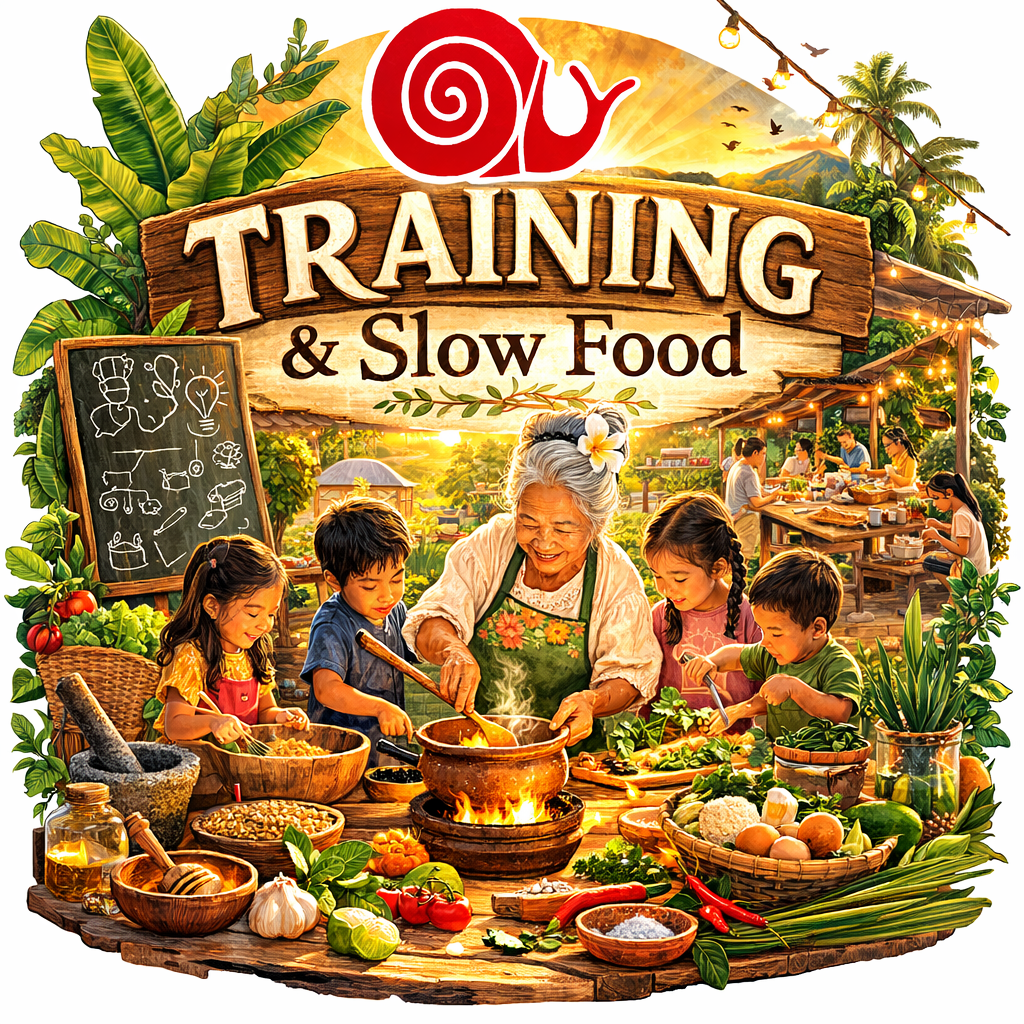
Heritage cooking taught by the people who know it best — the elders. Lola teaches apo. Seasonal cooking with whatever the farm and the sea provide. Banana leaf methods. Clay pot methods. Open fire methods. The knowledge that lives in hands, not textbooks.
The kitchen runs two to four workstations with jars, fermentation shelves, drying racks, and the tools needed to teach preservation properly. Community nutrition sessions show families how to prepare affordable, high-protein meals from what grows around them.
Children's weekend programs
Weekend agriculture blocks for children — not as a school subject but as real work on a real farm. Planting seedlings. Turning compost. Collecting eggs. Feeding animals. Using tools safely. Harvesting and cooking what they grew.
The programs are free — but they come with a deal. Kids participate in community clean-up days, organised in partnership with the mayor and local barangay officers. Safe areas, properly supervised — could be tidying up around town, could be helping on our farm. It is fun, it is educational, and it genuinely helps the community.
Children who grow up knowing where food comes from make better farmers, better cooks, better community members. That is the long game.
Farmer training
Practical sessions for neighbouring farmers: composting, water management, rotational grazing, cold chain basics, food preservation techniques. Traditional methods strengthened by modern understanding. No lectures. Hands in the soil.
The canopy principle
Training is like a canopy. The big tree shades the small one until the small one grows strong and becomes the pillar of the forest. Knowledge moves: elder to youth, farmer to farmer, community to community. Nothing is lost.
This knowledge will be learned, taught, and shared.
It stays alive by being used.
Community gathering space
The open pavilion beside the café is the community heart. Farmers meet here after market. Families eat together here. Planning happens here. Decisions are made together here. It is not a meeting room — it is a shared table.
Workshops & Training — Live from POS
All programs and workshops with current prices and booking info.